 OnlyLocal
Shinjuku izakaya
Shinjuku izakaya: a walk-in plan for tourists
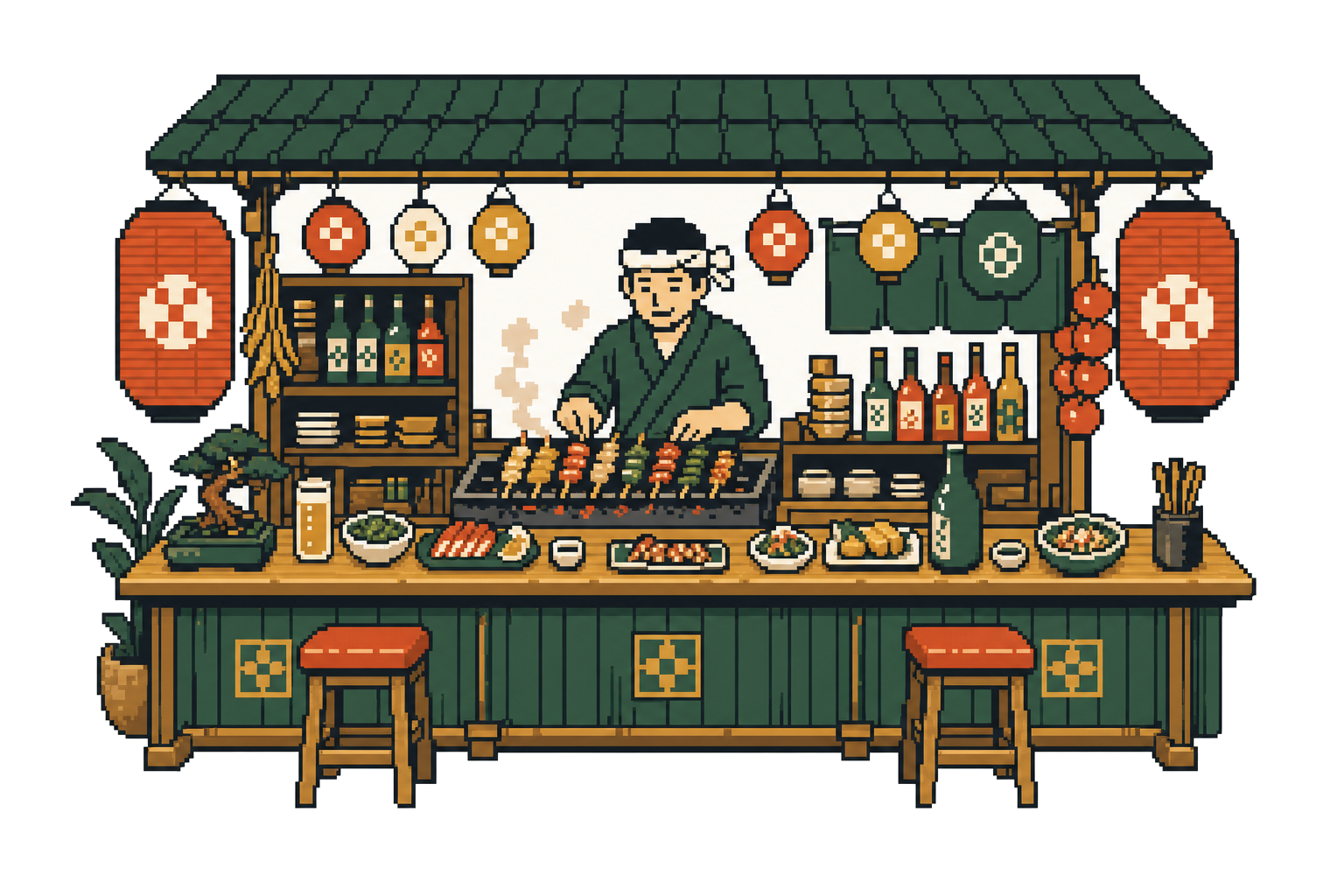
Choose a realistic Shinjuku izakaya area and recover quickly if the first option is full.

Yuki's Short Answer
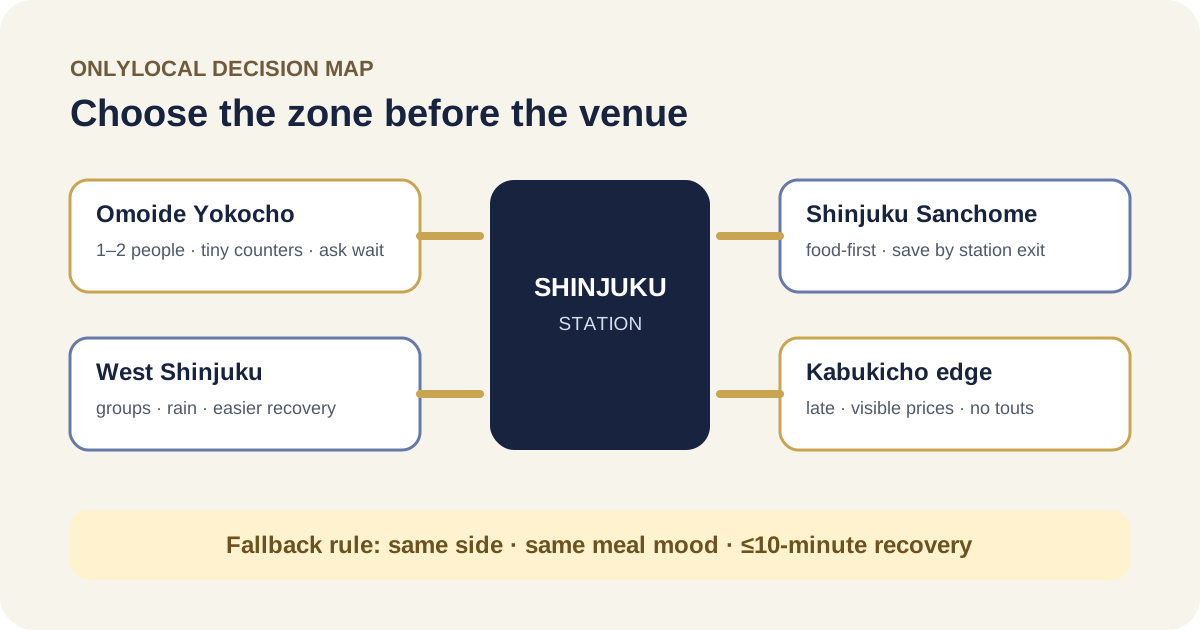
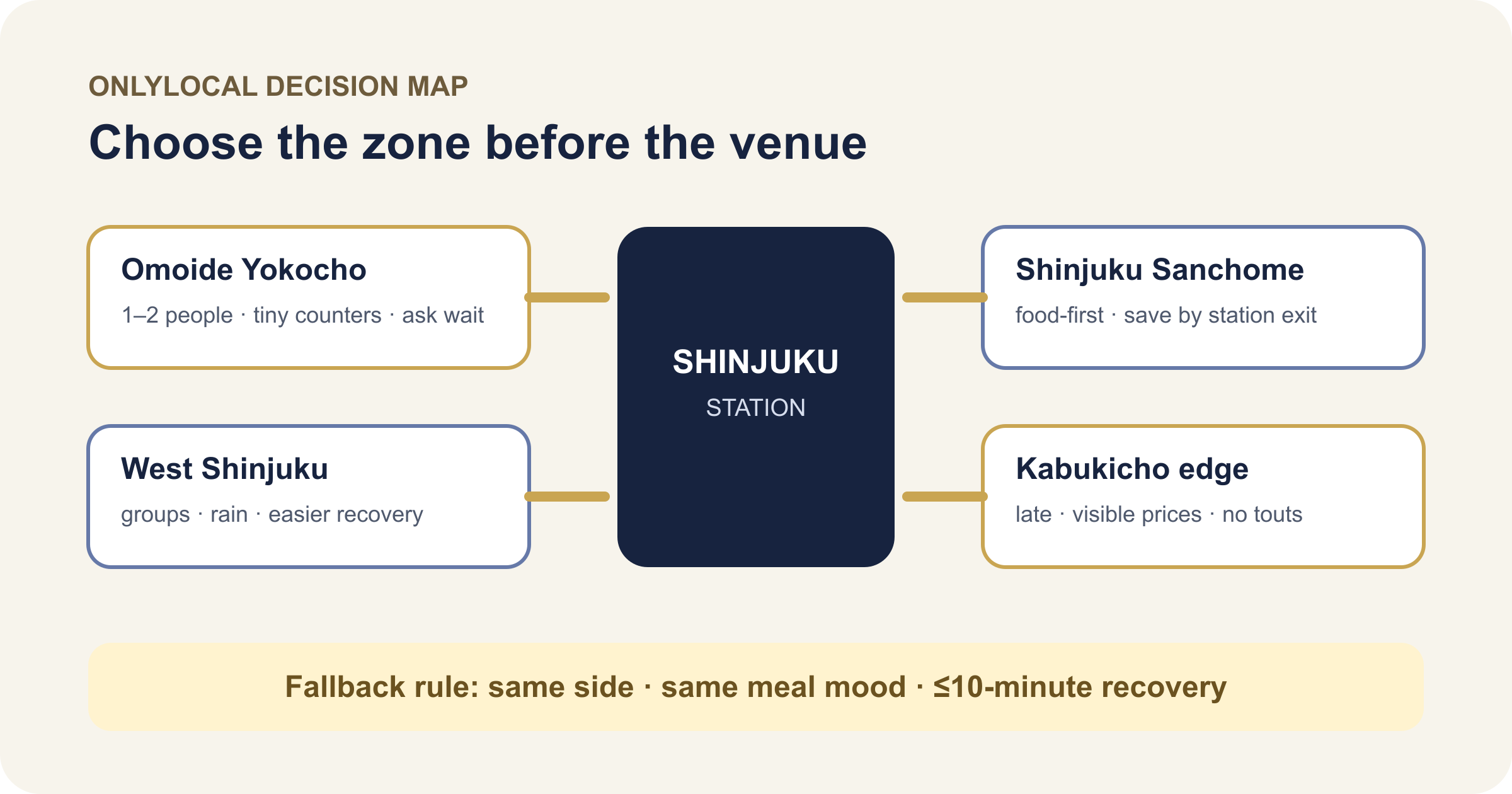
For a walk-in izakaya in Shinjuku, choose the zone before the venue. Omoide Yokocho suits one or two people who accept tiny counters and cash; Shinjuku Sanchome offers a broader food-first search; west-side dining buildings are easier in rain or for groups; the Kabukicho edge works late but requires clear-price and no-tout discipline. Set a wait limit and keep a same-side backup.
Decision Table
| Signal or option | What it means for the trip |
|---|---|
| Omoide Yokocho | Best for 1–2 people and compact counter atmosphere; tiny seat counts make short queues deceptive |
| Shinjuku Sanchome | Best for a food-first search with more spread-out options; save candidates by station exit |
| West Shinjuku | Best for groups, rain, and easier buildings; less alley atmosphere but simpler recovery |
| Kabukicho edge | Best for a late, lively meal; avoid tout-led venues and confirm prices before sitting |
| Check at the door | Seats, queue, otoshi or table charge, smoking, menu clarity, card/cash, and last order |
| Fallback rule | Same side of Shinjuku Station, same meal mood, and no more than a 10-minute recovery walk |
The 5-minute door check
Use the same sequence at every candidate so a high rating does not hide practical friction.
- 01Seats
Can this party fit now, and how many parties are ahead?
- 02Charges
Is there otoshi, a seat charge, or a minimum order?
- 03Comfort
Smoking, menu language, stairs, luggage, and group fit
- 04Timing
Likely wait, last order, final trains, and hotel route
- 05Fallback
Leave when the wait exceeds the limit you chose in advance
Choose a Shinjuku zone before choosing an izakaya
Shinjuku is several dinner areas joined by a very large station. Crossing from west to east after a rejection can cost more time than changing restaurants within the same zone. Start from your hotel side, train exit, party size, and weather, then compare venues inside one compact area.
Treat a short queue differently at a tiny counter
GO TOKYO describes many Omoide Yokocho shops as holding only five or six guests. At that scale, two parties ahead can mean a long wait. Ask for the likely wait, decide your cutoff before joining, and move to the backup when the answer no longer fits the night.
Check otoshi, smoking, and payment before sitting
JNTO explains that izakaya commonly serve a small otoshi appetizer that can function as a table charge. Read posted prices, ask when a charge matters to your budget, check the smoking setup, and carry a payment fallback. These practical details matter more than a tiny rating difference.
Match the venue to the group
One or two adults can use narrow counters and standing formats that do not work for five people, a stroller, or large luggage. Groups should prefer larger dining floors or reserve ahead. Families should check smoke exposure, seating, stairs, and whether ordering requires long explanations.
Keep the backup on the same side of the station
A real backup protects the evening in minutes. Keep the same format—yakitori for yakitori, beer and small plates for izakaya—and avoid turning a rejection into another cross-city search.
Illustrative traveler scenario
Friday, 7:30pm · two travelers · 20-minute wait limit
- First choice
- Tiny west-side counter; two parties waiting
- Constraint
- Hotel is west of the station and rain has started
- Decision
- Ask for the likely wait instead of joining silently
- Backup
- Move to a roomier west-side izakaya within 10 minutes
This example demonstrates the decision process; it is not a live availability claim.
Decision Checklist
- Party size and seat type
- Likely wait and personal cutoff
- Otoshi or table charge
- Smoking setup
- Menu and allergy communication
- Card, cash, or unknown
- Last order and route home
- Same-side backup
Turn this into tonight's plan
OnlyLocal shows local-good picks with reservation friction, queue risk, language comfort, payment notes, and nearby backups.
Ask Yuki to plan tonight
FAQ
Can tourists walk into izakaya in Shinjuku?
Often yes, especially as one or two people outside the busiest Friday and Saturday dinner period. Entry is never guaranteed, so check seats and keep a same-side backup.
What is otoshi at an izakaya?
Otoshi is a small appetizer commonly served after you sit and is often connected to a table charge. It is a normal izakaya custom, but you can ask about charges before sitting if the budget matters.
Is Omoide Yokocho good for groups?
It is usually easier for one or two people because many counters are very small. Larger groups should choose a roomier building or split only if everyone is comfortable doing so.
Should I follow a street tout in Kabukicho?
No. Choose venues with visible names and prices, and do not follow a tout into an unclear venue.
What should my backup izakaya look like?
It should be on the same side of Shinjuku Station, fit the same group size and budget, and preserve the same food-and-drink mood.
How much should I budget for an izakaya night in Shinjuku?
Roughly 3,000 to 5,000 yen per person covers a typical casual izakaya session with several small plates and a few drinks, plus a table charge of a few hundred yen at many places. Ordering steadily rather than all at once helps you control the total. Be cautious with places that have touts outside and no visible prices, as those are where bills surprise people.
Do Shinjuku izakaya take credit cards?
Many mid-size and chain izakaya now accept cards and IC payment, but small backstreet places, especially older counters, can still be cash-only. Signs at the entrance are not always accurate, so it is worth asking before you order heavily. Carrying around 5,000 to 10,000 yen in cash per person keeps any Shinjuku izakaya night friction-free.
How late do izakaya in Shinjuku stay open?
Many run until midnight or later, and some near the station go into the early morning hours, with last order typically 30 to 60 minutes before closing. This makes a later start realistic: arriving after 9pm often means shorter waits than the 7pm to 8:30pm peak. Just keep your train time in mind, since last trains generally leave around midnight.
Sources and Method
This guide is a traveler decision framework. Official facts are linked below; illustrative scenarios explain the decision process and are not live availability claims.
- Official sourceDinner at a Japanese TavernJapan National Tourism Organization · Izakaya format, ordering, otoshi, and traveler etiquetteChecked 2026-07-31
- Official sourceOmoide YokochoGO TOKYO · Official area description, location, compact seating, and cash contextChecked 2026-07-31
- Official sourceJapanese Customs and EtiquetteJapan National Tourism Organization · General visitor etiquetteChecked 2026-07-31
Tokyo Food Without Regret
Related Guides
 Shinjuku Omoide Yokocho for Tourists
A practical traveler guide to Shinjuku Omoide Yokocho tourists, with queue, reservation, language, payment, timing, and backup-plan notes.
Ginza Dinner Without Reservation: A Realistic Tourist Plan
A practical traveler guide to Ginza dinner without reservation, with queue, reservation, language, payment, timing, and backup-plan notes.
Harajuku Lunch Guide: Choose Takeshita, Cat Street, or Omotesando
Choose a Harajuku lunch zone by budget, queue tolerance, group size and afternoon route, with practical Omotesando and Yoyogi backups.
Shinjuku Omoide Yokocho for Tourists
A practical traveler guide to Shinjuku Omoide Yokocho tourists, with queue, reservation, language, payment, timing, and backup-plan notes.
Ginza Dinner Without Reservation: A Realistic Tourist Plan
A practical traveler guide to Ginza dinner without reservation, with queue, reservation, language, payment, timing, and backup-plan notes.
Harajuku Lunch Guide: Choose Takeshita, Cat Street, or Omotesando
Choose a Harajuku lunch zone by budget, queue tolerance, group size and afternoon route, with practical Omotesando and Yoyogi backups.